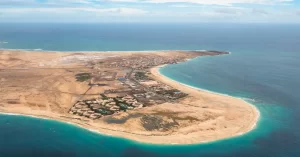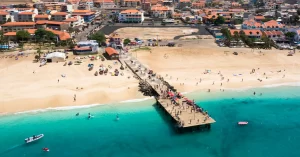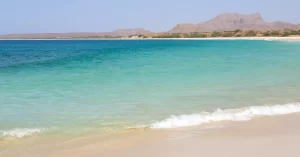

Located on the southern coast of Sal Island in Cape Verde, Santa Maria is a lively destination known for its white sandy beaches, crystal-clear waters, and vibrant ambiance. However, this town has a fascinating past that stretches back centuries. From its origins as a salt production center to its transformation into a premier vacation destination, the history of Santa Maria is a story of resilience, adaptation, and progress.
The Birth of Santa Maria: A Town Built on Salt
Salt production directly led to the founding of Santa Maria in the early 19th century. The natural salt flats (salinas) found in Santa Maria, together with those in the Volcano of Pedra de Lume, played a crucial role in the island’s economy. Salt was a highly valuable commodity at the time, widely used for food preservation and trade. Recognizing this potential, Portuguese settlers and European merchants began investing in Santa Maria’s salt industry, which led to the rapid development of the town.
The Santa Maria salt flats became one of the most significant sources of economic activity on the island. The region’s arid climate and consistent trade winds created perfect conditions for large-scale salt extraction. Many of the workers who toiled in the salt flats were laborers brought from nearby islands and mainland Africa, often under harsh and exploitative conditions. Their efforts were the backbone of Santa Maria’s early salt industry, contributing to a small but growing population.
The Population and Lifestyle in Early Santa Maria
During the peak of salt production in the 19th and early 20th centuries, Santa Maria was home to a modest but industrious community. The population primarily consisted of salt workers, fishermen, and traders, many of whom lived in simple, traditional Cape Verdean houses made from local materials. The lifestyle was harsh, with workers enduring extreme heat and physically demanding labor in the salt pans. However, despite these challenges, the town flourished due to its strategic location and the increasing demand for salt exports.
Santa Maria’s salt exports were primarily sent to Brazil, its biggest market. However, in 1887, Brazil imposed high import taxes to protect its own salt production, drastically reducing demand for Cape Verdean salt. This dealt a severe blow to Santa Maria’s economy, leading to the irreversible decline of the salt industry.
From Salt to Sun: The Transformation into a Tourist Destination
As the salt industry waned, Santa Maria faced a period of uncertainty. However, in the latter half of the 20th century, the town found a new purpose: tourism. Cape Verde’s stunning natural beauty, combined with its year-round warm climate, made it an attractive location for international travelers. By the 1990s, investors began developing hotels, resorts, and tourist infrastructure, paving the way for Santa Maria’s next chapter.
The beaches of Santa Maria became a major draw for visitors, offering some of the best conditions in the world for water sports like windsurfing, kitesurfing, and diving. The town’s transformation also led to an economic revival, with new job opportunities emerging in the hospitality and service sectors. Locals who once relied on salt production found new livelihoods in tourism-related businesses, from restaurants and shops to tour guiding and water sports instruction.
Modern Santa Maria: A Blend of History and Leisure
Today, Santa Maria stands as a vibrant and diverse community, blending its historical roots with modern tourism. The town’s architecture reflects this evolution, with colonial-style buildings standing alongside contemporary resorts. Visitors can still explore the old salt flats, which remain a testament to Santa Maria’s industrial past, while also enjoying the lively atmosphere of its beachfront promenades, local markets, and cultural festivals.
Conclusion
From its humble beginnings as a salt-producing settlement to its rise as a premier tourist destination, Santa Maria’s history is a testament to the resilience and adaptability of its people. While the salt industry may have faded, the town’s legacy lives on through its stunning landscapes, warm hospitality, and cultural richness. As you walk through its historic streets or relax on its world-class beaches, Santa Maria reveals itself as a link between past and future of Sal Island, as well as Cape Verde’s broader history.